


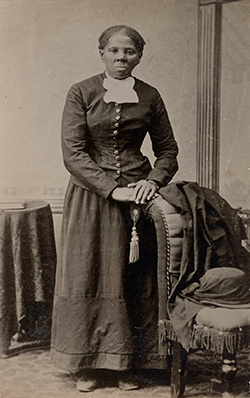
 Harriet Tubman’s exploits were legendary. She exemplified courage, repeatedly navigating hundreds of miles of hostile territory without being captured. Tubman is best known for her work as an abolitionist and her daring rescues, leading approximately 70 enslaved people, including her own family and friends, to freedom. “I was the conductor of the Underground Railroad for eight years,” Tubman said. “I can say what most conductors can't say. I never ran my train off the track, and I never lost a passenger."
Less well known is her unique place in pension history. Although Tubman played multiple roles in the Union Army, serving as a nurse, cook, scout, and spy in South Carolina, her path to securing a pension that recognized her service was difficult. After receiving about $200 for her three years of Civil War service, Tubman spent the next three decades seeking the additional compensation she deserved. During the late 1890s, she submitted an affidavit to Congress explaining her request for payment.
In 1899, in recognition of her valor and service, Congress passed a private bill — signed by President William McKinley — that increased her monthly widow’s pension from $8 to $20. Her military legacy continues to be honored today. On Veterans Day, November 11, 2024, Tubman was posthumously commissioned as a one-star brigadier general in the Maryland National Guard.
This article is part of a series exploring pension milestones, in conjunction with the America 250 celebration.